College Hazing Results In Death

Posted by fl1guy2 | 2:57 PM

FAMU Marching 100 and college hazing

For black college bands, this is one of the biggest weekends there is: the Bayou Classic.

Southern University and Grambling University football teams square off in New Orleans for their annual family reunion party and rivalry.

It is also one of the rare occasions when a national audience gets to see the real show: the high stepping, the hip-shaking and the horns blaring during the battle of the bands. But this weekend, the discussion around black college bands is not about fun and revelry.
In this Saturday, Nov. 19, 2011, photo, Robert Champion, a drum major in Florida A&M University's Marching 100 band, performs during halftime of a football game in Orlando, Fla. (Joseph Brown III - AP)
It is about whether a culture of hazing led to the death of Robert Champion, one the drum majors for the famed Marching 100 band at Florida A&M University in Tallahassee. The band director has been fired. Band activities have been suspended. State and local criminal investigations are underway. And the governor has gotten involved after police said they think some form of hazing may have caused his injuries.

Rumors are swirling about why Champion, a clarinet player who was recently named a drum major, would have been hazed.

Hazing has a long history on college campuses. It ranges from binge drinking to demeaning pranks and, at its worst, beatings that have sometimes turned fatal.

At first blush, the use of the term seemed all wrong to me. In college fraternities—like the one I pledged—hazing was part of the initiation process. Those seeking to get in were at the bottom of the totem pole and, far too often, willing to do whatever was necessary to get in.

Once in, however, the threat of hazing ceased.

But friends and colleagues said that’s not the case in every organization. One, a retired Marine, wrote: “From a military point of view, hazing was a continuous thing. Although you weren’t hazed by your subordinates, you were welcomed (hazed) into your new group of peers once promoted.”

Sometimes hazing is trivial and silly. But it can also be dangerous. Universities have cracked down and so have fraternities and sororities to fend off lawsuits that have threatened to bankrupt them.

Wherever it happens, hazing typically requires the complicity of the pledge, the current chapter members and, almost always, adults in authority who conveniently look the other way.

Far too often, only significant injury or a death forces people to pay attention.

In this case, Champion, 26, was found unresponsive in a parking lot after the team’s game with Bethune-Cookman. He was vomiting and complained of shortness of breath. He died at a hospital a short time later. Florida Gov. Rick Scott has ordered an investigation punish “individuals directly or indirectly responsible for this death.”

Tallahassee attorney Chuck Hobbs said told the Associated Press that longtime band director Julian White--who has been fired--tried unsuccessfully to stop hazing.
In this photo taken Nov. 19, 2011, Florida A&M University's Director of Bands Julian White conducts the marching band during the halftime the Florida Classic at the Citrus Bowl in Orlando. White, the longtime director of the famed marching band, was fired Wednesday, Nov. 23 by the university. (Joseph Brown III - AP)
“Hazing within the Marching 100 has often been met with reckless indifference by White’s superior officers who often ignored his requests for assistance,” Hobbs wrote in a letter to Florida A&M President James Ammons, according to the AP.

I hope that the inquiry doe not end with any young people who may have been involved. Nor should it end with FAMU. Thuggery that results in death or serious injury cannot and should not be tolerated.

Lawrence C. Ross Jr., in July, wrote a piece for The Root, calling out abusers who arrogantly assume that, through their actions, they are building better people.

“Hazers want and seek the power that comes with being able to order subservient pledges to do whatever they want,” wrote Ross, the author of “The Divine Nine: The History of African American Fraternities and Sororities .” “And for the pledges, the feeling of validation as a man, having gone through some trials and tribulations, is what motivates their continued participation in hazing activities.”

It is all of our jobs to remind our young people that there is nothing laudable about taking or receiving a beating.


Source From:

http://www.washingtonpost.com/blogs/therootdc/post/famu-marching-100-and-college-hazing/2011/11/26/gIQAjw8BzN_blog.html

Chamber Encourages Support of Small Business Saturday

Business owners share what Small Business Saturday means to them.

Black Friday is over and now it's time for small businesses to shine with Small Business Saturday.

"We appreciate the huge public relations push that American express has put on this Saturday as small business Saturday, they started this months ago picking a Saturday here or there but we have promoted small business Saturday, every Saturday since it began," said Jack Lank, president of the United Regional Chamber of Commerce, which supports businesses in 16 communities including Attleboro, Foxborough, Mansfield, Norton, Seekonk and Wrentham.

"Why can’t every Saturday be where you choose a small business to buy your goods and/or services," Lank added. "By purchasing goods and services from a local business, it helps put money right back into our local economy. For every $1 spent, 68 cents stays in the community."

Shoppers need to think outside of the box as support for local business goes beyond a traditional retail store. Supporting local businesses includes buying gift certificates from local restaurants and mom and pop shops including Miller's, Colonel Blackinton and Papagallos in Attleboro, the Reserve Wine Bin in Foxborough and Old Thyme Shoppe in Norton, to name a few. Buying gift certificates from local salons and service businesses is also supporting the community whether it includes buying hair products at Cutting Edge or a massage for friend at Full Circle Fitness.

It's also about evoking memories and childhood traditions by buying a Christmas trees at Attleboro'sStandley Tree Farm.

"It's been busy, but it's been normal as we get closer to the Christmas cutting season," Standley Tree Farm owner Bill Standley said Saturday afternoon.

Standley has his doubts that people are as interested in supporting local business.

"I think it's nice, but I'm not sure people give a darn," he said. "They are going to go where they want to go and buy what they want to buy."

For Standley, its small business Saturday every day. "I do business locally and it has to be made in the USA. When I see people who come in here who own a business I buy from them too if it is something I need and can buy from their business."

Just over the border is Seven Arrows Farm located at 346 Oakhill Ave. on the Attleboro/Seekonk town line.

The small business has been owned and operated for the past 30 years by husband and wife duo Judy and Michael Marcellot.

The Marcellots have not seen a rush of shoppers this Small Business Saturday, but that's okay, according to Judy.

"We have last minute Christmas shoppers," she said. "A lot of them make their own things. They start making their own things right before Christmas."

Marcellot said Seven Acres is an alternative business that doesn't quite conform with business modalities, "People come here to relax, enjoy a cup of tea, it's not like a Christmas rush."

It was business as usual at the Old Thyme Shoppe in Norton, at least for the pre-Christmas shopping season, according to a clerk. The small business had a busier day on Black Friday. Why? The store held a raffle for customers on Black Friday and marketed it in a newsletter that they sent out to customers in advance of Black Friday. "It worked," said the clerk. "We emailed the newsletter to all of our customers and I think it helped."

Lank said the Chamber understands that there are two sides of buying at the big box stores and buying at the little gift shop or small boutique, according to Lank. Communities need to do what they can to support the small businesses, that are the backbone of the local economy but people also need to shop at the big box stores because they provide hundreds of jobs for families, friends and neighbors.

"It's kinda of a Catch-22 situation," Lank said. "One challenge I made to our members at our Annual dinner, is to spend 50 percent of your holiday dollars at your local small business to support your local community and the other 50 percent at the Big box stores that provide local jobs for our friends and families."

"But buy local, you can help keep our region strong.

While she does not resent the existence of malls or big box stores, Marcellot said she has always been a small business shopper.

"I'm not a mall shopper, nope, no. I don't see it as a monetary thing to do. For me it is psychological and philosophical thing to do because you support your friends.

"We are all in this together," she added. "I want to know the owner of the shop or people behind the counter. I want someone to care that I came."


Originally Posted At:

http://norton.patch.com/articles/chamber-encourages-support-of-small-business-saturday-95cf5ab0

Matt Damon Makes Awkward First Impression in New 'We Bought a Zoo' Clip

November 26, 2011 06:03:41 GMT

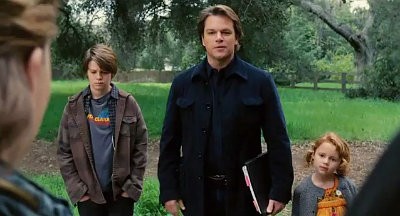
The new snippet from the Cameron Crowe-directed drama offers a peek at the scene in which Damon introduces himself and his family to the zookeeper team led by Scarlett Johansson.


Matt Damon Makes Awkward First Impression in New 'We Bought a Zoo' Clip
See larger image

20th Century Fox has revealed a fresh clip for "We Bought a Zoo". The snippet sees how Matt Damon and his kids first meetScarlett Johansson and her zookeeper team in the movie. Despite his attempt to be friendly, Damon seems to leave an awkward first impression after declaring that their introduction marks his "modern day adventures" in the zoo.

In the film, Damon plays Benjamin Mee as he decides to move his family into an abandoned zoo, Rosemoor Wildlife Park, after his wife dies from brain cancer. There, he lives his days dealing with escaped tigers, raising endangered animals, working with an eclectic skeleton crew and readying the zoo for a reopening.

"We Bought a Zoo" also stars Johansson as zookeper Kelly Foster, Elle Fanning as Foster's cousin Lily, Colin Ford and Maggie Elizabeth Jones as Damon's kids Dylan and Rosie, and Thomas Haden Church as Duncan Mee. Directed by Cameron Crowe, the drama film is slated for a December 23 release in theaters across the U.S.


© AceShowbiz.com

CBS’s ‘Elf on the Shelf’: Unwarranted Christmas surveillance techniques

( / CBS ) - Chippey and his fellow elves scout the behavior of boys and girls, and they update Santa Claus nightly about who deserves gifts in a Christmas special that tries to move the spirit.

You aren’t imagining things — Christmas’s beady eyes are watching us closer than ever. It sees you when you’re paying 22.8 percent interest on your credit cards. It’s breathing hotly down your neck. It’s opening the doors to your Target earlier and earlier on Thanksgiving night. It’s reporting your thoughts and deeds back to the people who number-crunch the dreaded Consumer Confidence Index. One false move and the entire economy collapses, which will be your fault. Yes, you.

Another November encroachment, relatively ungriped-about, is how much sooner the junky holiday TV specials and cavity-causing Hallmark and Lifetime movies have started. Already I’ve “accidentally” forgotten to review about 10 of them.

But CBS’s animated “The Elf on the Shelf: An Elf’s Story,” airing Friday night, deserves a special look, if for no other reason than to study its ability to magnify (and commodify) a Langley-like application of unwarranted surveillance techniques during Christmastime.

Every parent knows: When the household’s youngest miscreants have gone too far, all you have to do at this time of year is reach for the phone and say, “That’s it! I’m calling Santa! I’m telling him what you’ve done. He won’t be happy.” Right away, the reprobates will wail their apologies and promise to do better. (It helps immensely if you follow through with the call. Get mean Uncle Hank to pretend to be Santa’s executive assistant on the other end of the line. “And Mr. Claus would know you frommmm . . . ?”)

Who can resist the holiday fun of scaring the children into good behavior? Ask any of history’s most efficient dictators — they’ll tell you. Christmas just isn’t Christmas without the naughty-nice punishment paradigm. Where would this holiday be without its good old-fashioned behavioral paranoia? Charles Dickens may get all the credit for this, but do also consider George Orwell.

That’s what makes “The Elf on the Shelf” so ingeniously successful. Cooked up in 2005 by a mother-daughter duo in Georgia, “The Elf on the Shelf” began as a children’s storybook that came packaged with a benign little elf doll — “a pixie scout” in the tale — togged out in a cute red leotard.

As the story goes, once a family gives their elf a name and places him on a shelf or mantel, he is endowed with magic powers. Beginning around Thanksgiving, the pixie scout watches everything that goes on during the day. At night, he flies back to the North Pole and gives Santa a full account: who behaved, who didn’t.

The elf returns to your house in the dark of morning, before everyone gets up, positioning himself in a different spot from where he was before, so that the children have to find his new vantage point. Also, very important — if anyone in the house touches the elf in any way, he’ll lose his magic. And if that happens, then we’re all royally screwed come Christmas Eve. In other words, it’s no longer Santa Claus who knows if you’ve been bad or good. It’s a whole army of his pixie-scout elves. (All a parent has to do to sustain the fantasy is remember to move the elf each night after the kids have gone to bed.)


Rejected by publishers far and wide, “The Elf on the Shelf’s” creators decided to self-produce the book and doll that goes with it. In six years, they’ve reportedly sold more than 2 million book-elf packages.

* * *

The cartoon version airing on CBS brings all this to computer-generated life, which is, of course, barely any life at all. The animation reminds you of the kind seen in allergy-relief commercials, and yet so much tender, loving care apparently went into “The Elf on the Shelf”: Hundreds of animators in India worked on it — the credits are packed with Deepaks. (And Vikrams, Abhijeets, Rakeshes, Sandeeps, Neelus; an endless parade of names reminding us that nothing outsources itself quite like Christmas can.)

At the North Pole, an eager pixie scout (voiced by Brendan Dooling) receives his first assignment, but Santa Claus warns him that it’s a doozy: At the suburban McTuttle house, it seems as though young Taylor McTuttle is on the threshold of “not believing.”

Not believing in what? The existence of Santa Claus, a viewer assumes, but also a belief inall of it, whatever it is. Like all secular expressions of the holiday, “The Elf on the Shelf” steers far clear of religious faith, insisting instead on a broadly defined system of “believing” in Christmas — vague yet ethically unobjectionable ideals.

The pixie scout is boxed up and delivered to the McTuttle house, where a blase Taylor — who appears, cartoonically, to be about 10 years old, precisely the proper age to “get it” about Santa Claus, etc. — shows hostility toward the Elf on the Shelf.

But Taylor’s twin sisters and parents are overjoyed by the elf’s inert presence, and the family (through song; through the worst sort of prefabricated song) perform the ritual of naming their elf: Chippey.

Thus magicalized, Chippey flies home that night to deliver his initial findings: Taylor is irredeemably skeptical about Christmas beliefs. Can he be saved?

Of course he can. “Christmas is a time for forgiveness,” the McTuttle family sings, in a loop of illogical (though empirical) reasoning: “That’s why we all believe in Christmas.”

The real failure here is that “The Elf on the Shelf’s” own cynicism — at its heart, it’s just a half-hour advertisement for a book and a toy — prevents it from joining the canon of prime-time animated Christmas specials that actually move the spirit. That’s okay. The bar set by Charlie Brown, Dr. Seuss and Rankin/Bass is quite high; few will ever achieve it, but plenty try each holiday season. Most fail for the same antiseptic reasons that “Elf on the Shelf” does.

* * *

But while we’re here, I find myself fascinated by “The Elf on the Shelf’s” success as a warmhearted disciplinary tool.

I first heard of the shelf-elf phenomenon five Christmases ago, when I was working on abook about modern Christmas traditions in a typical American suburb. Two days after Christmas, a municipal waste engineer drove me out to the county landfill (it was that sort of Christmas book), and on the way, he told me about “The Elf on the Shelf” and the amazing, even sweet way in which it had calmed down his hyperactive daughter’s frenetic anticipation for Christmas. The next holiday season, I saw “The Elf on the Shelf” (and imitators) everywhere, from church holiday bazaars to Barnes & Noble.

The concept of an omniscient and judgmental Santa (and his deputized elves) tracks with the evolution of American-style Christmas in the 19th century. As noted by historian Stephen Nissenbaum (in “The Battle for Christmas”) and others, Christmas in our nation’s early days was a lawless melee, in which the impoverished lower classes would riot if they were not appeased by booze and other treats given to them by their bosses and wealthier neighbors.

It was well-off New Yorkers of the early-to-mid-1800s who found refuge in repurposing the holiday as a family-minded, nominally religious retreat from social mayhem. The modernized morality of Dickens and other storytellers emphasized Christmas as a time to do good, to calm down, to behave. In such households, some theorize, the children assumed a role previously reserved for the town beggars: By staying out of trouble, they got a Christmas treat from a jolly old elf. Later came the songs and folklore about the 24-7 surveillance from the North Pole.

And so it’s worked for nearly two centuries, so long as you don’t think about it too much. “The Elf on the Shelf” is just another nannycam in a nanny state obsessed with penal codes. As long as you believe in him, the pixie-scout elf is no different than the store security camera and the gizmo that automatically generates speeding tickets. The tattle-tale elf, who reports back to the corporate Christmas machine, fits right in with our times.

The Elf on the Shelf:

An Elf’s Story

(30 minutes) airs Friday at 8:30 p.m.

on CBS.


Orignally Found On:

http://www.washingtonpost.com/lifestyle/style/cbss-elf-on-the-shelf-unwarranted-christmas-surveillance-techniques/2011/11/23/gIQApCSTtN_story_1.html